

Understanding and Navigating the European Arrest Warrant
The European Arrest Warrant (EAW) plays a crucial role in enhancing cross-border judicial cooperation within the European Union. Providing a framework for the arrest and transfer of individuals charged with or convicted of serious offenses, the EAW aims to streamline legal procedures and ensure that justice is efficiently served across member states. Understanding the mechanisms, processes, and support available for navigating the EAW can empower individuals and legal entities alike. For more detailed information, you can refer to support on European arrest warrant matters https://pbisaz.org/wp-content/pgs/support-on-european-arrest-warrant-matters-across-eu-jurisdictions.html.
The European Arrest Warrant: An Overview
Launched in 2004, the EAW represents a significant advancement in European legal cooperation. It replaced the lengthy extradition processes that were previously in place, facilitating a quicker and more efficient means of addressing crimes that cross borders within the EU. Under the EAW framework, a member state can request the arrest and transfer of a person from another member state without having to provide evidence of a prior conviction or lengthy legal justification. This significantly lowers the barriers for prosecution and ensures that fugitives cannot evade justice simply by moving to another country.

How the EAW Works
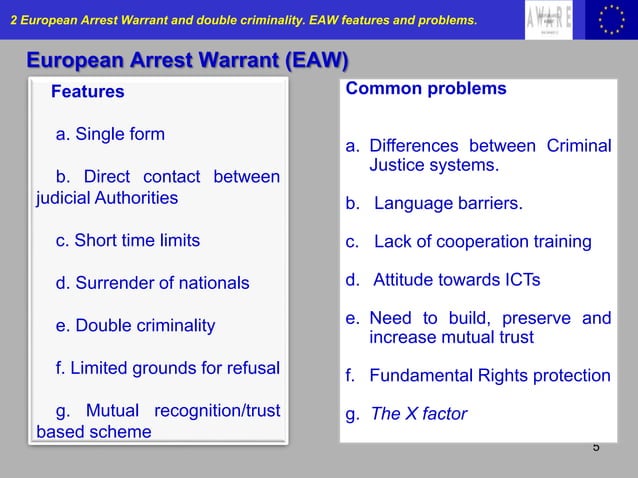
The EAW allows law enforcement agencies to request that an individual be arrested and surrendered for prosecution or to serve a sentence imposed by a court. The process begins with the issuance of an EAW by a member state’s judicial authority. This warrant must specify the individual sought, the criminal offense, and the sentence involved (if applicable). Once the EAW is issued, it is sent to the authorities in the requested member state, which must act upon it without unnecessary delay, typically within 60 days.
Legal Framework and Requirements
The EAW operates under the principle of mutual recognition, meaning that member states are obliged to recognize and enforce arrest warrants issued by other states. There are certain requirements and safeguards in place to ensure that the proceedings are just and that individuals’ rights are upheld. Notably, the EAW cannot be issued for offenses that are punishable by less than one year of imprisonment in the issuing state.
Key Protections Under the EAW
One of the critical aspects of the EAW is the respect for fundamental rights. Individuals subject to an EAW have the right to legal representation and the right to appeal against their surrender. Additionally, the executing state must take into account whether the warrant is compliant with both EU law and the European Convention on Human Rights, ensuring that no one is surrendered to a state where they might face unfair treatment or inhumane conditions.
Support for Individuals Facing an EAW
For those who find themselves facing an EAW, it’s essential to seek specialized legal support. Various organizations and legal practitioners across the EU offer expertise in navigating the complexities of the EAW system. These professionals provide crucial assistance in understanding the charges, exploring the rights of the accused, and preparing defenses or appeals against surrender.
Legal Aid and Representation
Individuals may qualify for legal aid to help cover the costs of representation when dealing with an EAW. However, the availability and terms of legal aid can differ significantly between member states. It’s important to consult with local legal experts to determine eligibility and what support is accessible in a specific jurisdiction.
Examples of EAW Cases
Over the years, numerous high-profile and complex cases have emerged under the EAW framework. Each case has contributed to shaping the interpretation and implementation of EAW regulations. For instance, the case of Poland v. Belgium raised critical discussions around political asylum and the treatment of individuals accused of politically motivated crimes. Such landmark cases illustrate the importance of ensuring compliance with both local and EU laws while respecting individual rights.
Challenges and Criticisms of the EAW
Despite its advantages, the EAW system is not without challenges. Critics argue that the framework may lead to abuses, particularly in cases where individuals seek asylum or face persecution based on their political beliefs. There have been calls for reforms that would establish clearer guidelines regarding the circumstances under which an EAW should not be executed, particularly when human rights considerations are at play.
Recent Developments and Future Directions
As the EU continues to evolve, ongoing discussions about reforming the EAW framework are being held. These include proposals to strengthen safeguards and ensure that the rights of individuals are more fully protected in the extradition process. With the advent of technological advancements and increasing transnational crimes, the EAW will likely continue to adapt, enhancing its effectiveness while balancing the need for justice with the respect for human rights.
Conclusion
The European Arrest Warrant represents a significant tool for judicial cooperation across the EU, allowing for the swift arrest and transfer of individuals charged with serious crimes. However, navigating the complexities of the EAW can be daunting. Understanding the legal framework, available support, and potential challenges is essential for anyone facing an EAW. Seeking professional legal assistance is paramount in ensuring that rights are protected and that individuals can adequately respond to the warrant against them.
In summary, while the EAW enhances cross-border cooperation in criminal matters, it is also vital to remain vigilant about protecting fundamental rights and ensuring that the justice system remains equitable and fair for all individuals.
Comments are closed